thsottiaux@thsottiaux·8小时前Saw some confusions, but all Pro plans have no 5-hour limits, and give the following usage compared to Plus. ✅ Pro 100 = 10X ✅ Pro 200 = 20X ✅ Pro 500 = 50X, access to ultrafast翻译
steipete@steipete·10小时前The Asahi project was all about taking something closed and restricted and opening it up. Adding new restrictions that make it harder for other projects to build on that is not the way. And that AI rejection is just silly.翻译
levelsio@levelsio·13小时前Intermediary conclusion for now: Most of the good non-fluoride hydroxyapatite toothpaste like Nobs, Boka and Biomin are only sold in the US as most Europeans are blissfully unaware of the problem with fluoride Trying to buy it on Amazon Europe you pay like 5x to 10x the price, if it's available at all, it's crazy! Guess we have to fly to 🇺🇸 America again翻译
levelsio@levelsio·13小时前"What the smartest people (or nerds) do on the weekend is what everyone else will do during the week in ten years."翻译
levelsio@levelsio·14小时前I think many people are underestimating basic economics If something is 5x cheaper to buy and it's personalized (aka better) it'll be worth it Also you've ever ordered something from furniture brands these days? Service is non-existent and everything is delayed because of labor shortages, on top of that two of the furniture companies I ordered from went bankrupt after we got our orders! We're in the era of personal software and as an extension of that personal hardware, with kind of a second maker wave happening, because now it's suddenly become accessible to design and build hardware for almost everybody, thanks to AI The question here is will suppliers (mostly in China) also start doing custom assembly and shipping it worldwide, many already do but this seems a market they could jump on Many furniture brands are essentially dropshippers for products made in cheap countries anyway. Even the fancy Italian brands mostly produce in Eastern Europe and China! So all you're doing is removing the intermediary I think 🤔翻译
steipete@steipete·14小时前“we were made aware of multiple attempts to exploit our permissive licensing to hijack our work” what did y’all think permissive meant? vibes? papers? essays?翻译
steipete@steipete·18小时前i grew up playing simcity (one of my favorite games of all time), & if you told me i could zone land for data centers which require a massive capital investment into my city, could have enormous tax revenue, they could be extremely clean (depending on energy), there is minimal or no traffic, they could be aesthetically tolerable, & nothing like heavy industry which is pollution central, i’d think i was about to build the richest fucking city in the world. i’d go absolutely ham & build as many data centers as i could possibly fit. & yet, here we are, with people fighting tooth & nail to keep them out. which means the debate isn’t about the data centers at all.翻译
levelsio@levelsio·19小时前Massive market maybe opening up now for woodworkers and carpenters etc to put stuff together that people design themselves with their AI agent and then buy raw materials from suppliers翻译
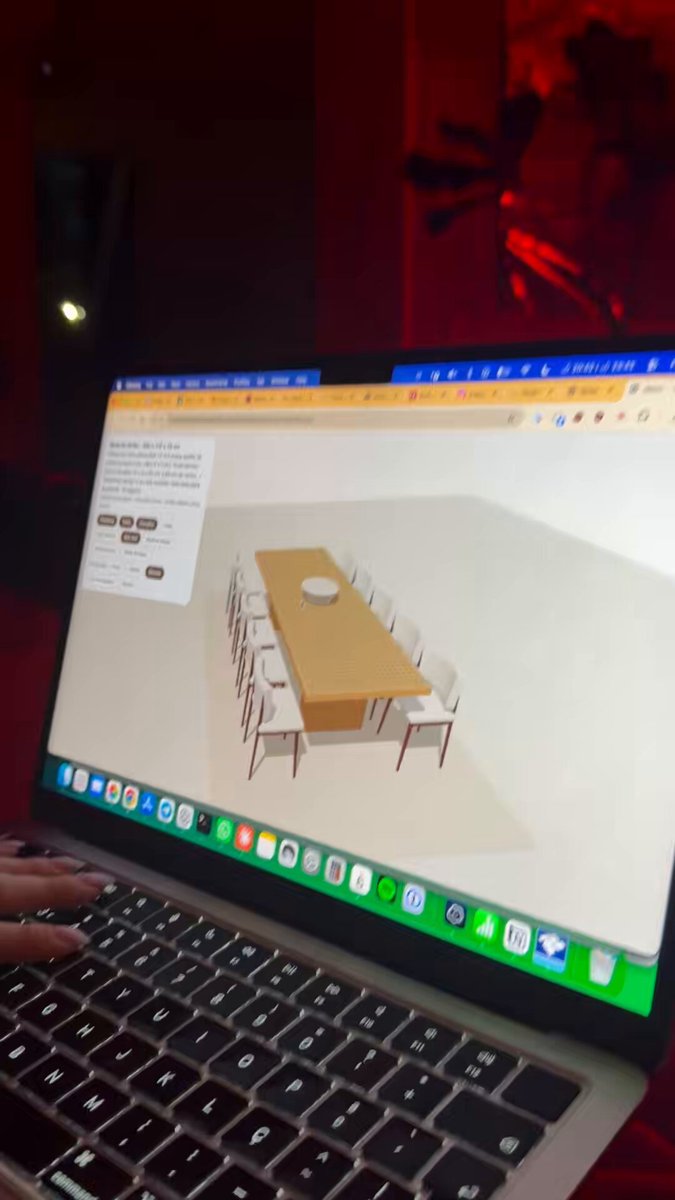
levelsio@levelsio·19小时前Claude Code can design furniture part by part and then give you a bill of materials to order each part and put it together yourself And way cheaper than big interior brands sell you their furniture Furnishing my house I discovered how absolutely insane prices are for the most basic cheap materials put together with a fancy brand tied to it One shop had a sofa for $30,000 😂 I think with Opus 5.5 and other models easily operating 3d programs like Blender and FreeCAD (both free) it makes more sense to cut out the middle man and go straight to suppliers and design and build your own furniture Which in a way makes customers more powerful (they can get exactly what they want and usually for cheaper without the markup) Anyway @theannalux designed this table from scratch, she's not a furniture designer, not a coder, she just had an idea of a style and worked with Claude Code in the terminal (far superior to the app I will keep saying this) If you design your own furniture and buy the raw materials directly, you can save 85% compared to premium brands like Poliform That means the $30,000 sofa becomes $4,500! And the $8,000 dinner table becomes just $1,200! You can see where the idea comes from that AI will make everything 5x to 20x cheaper, and it's already starting!翻译
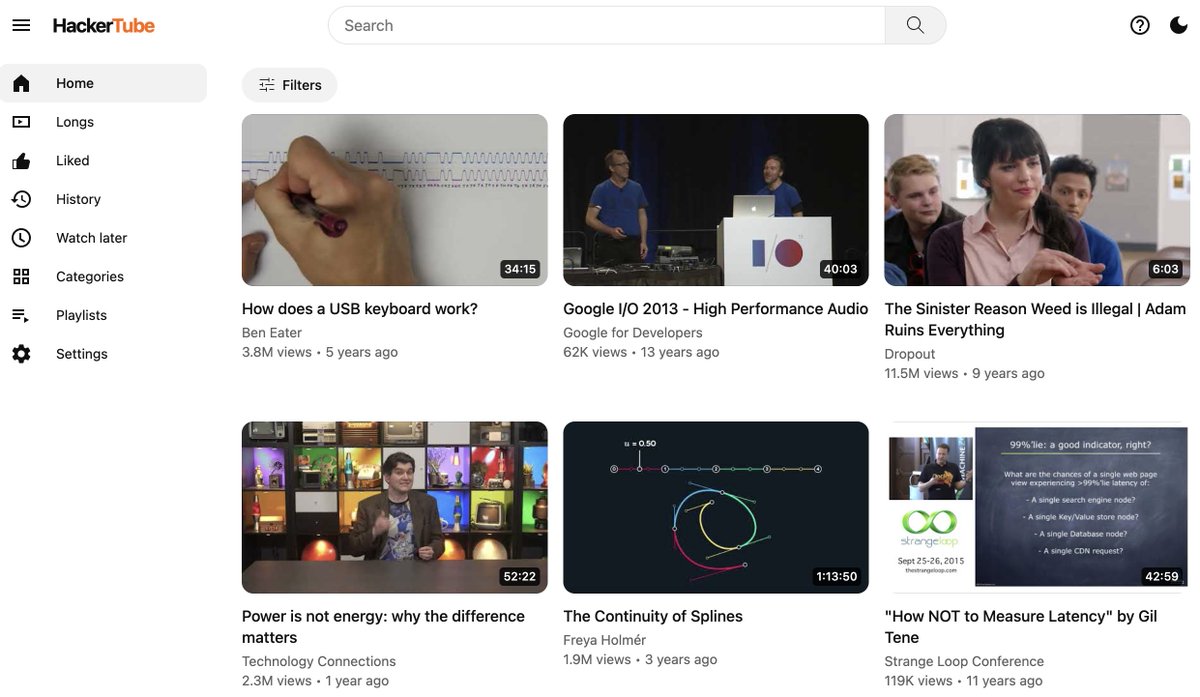
karpathy@karpathy·20小时前Earlier this week Tristan published his top YouTube channels: https://thume.ca/2026/11/01/youtube-tier-list-2026/ Which looked excellent so clearly I had to turn it into TristanTube: https://karpathy.ai/tristan-tube/ 47K super nerdy videos +TV mode for laid back watching. (One-shotted with Claude Code in 3 minutes)翻译
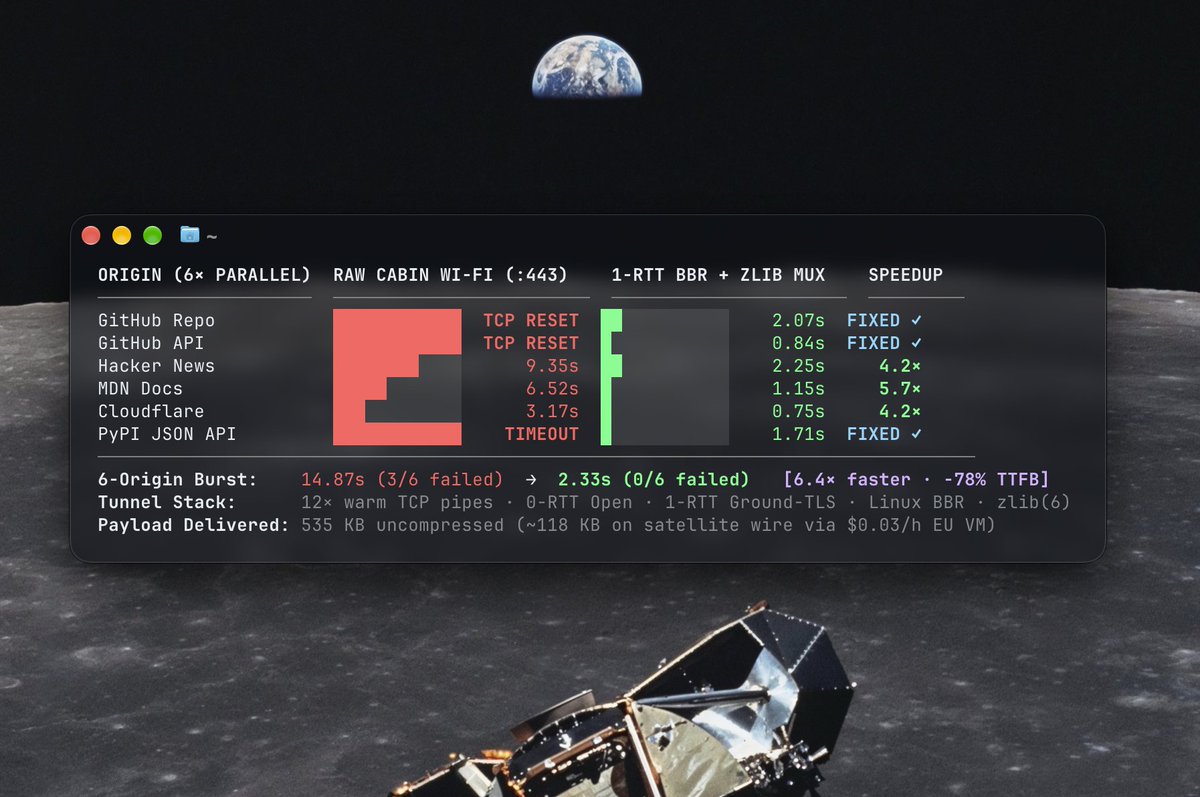
steipete@steipete·21小时前Life hack if your flight doesn't have Starlink: ask your agent to bypass the 443 split-TCP proxy via a $0.03/h BBR multiplexer and get ~4× faster, reset-free internet. Open-sourcing it from the clouds: https://github.com/Th0rgal/satmux翻译
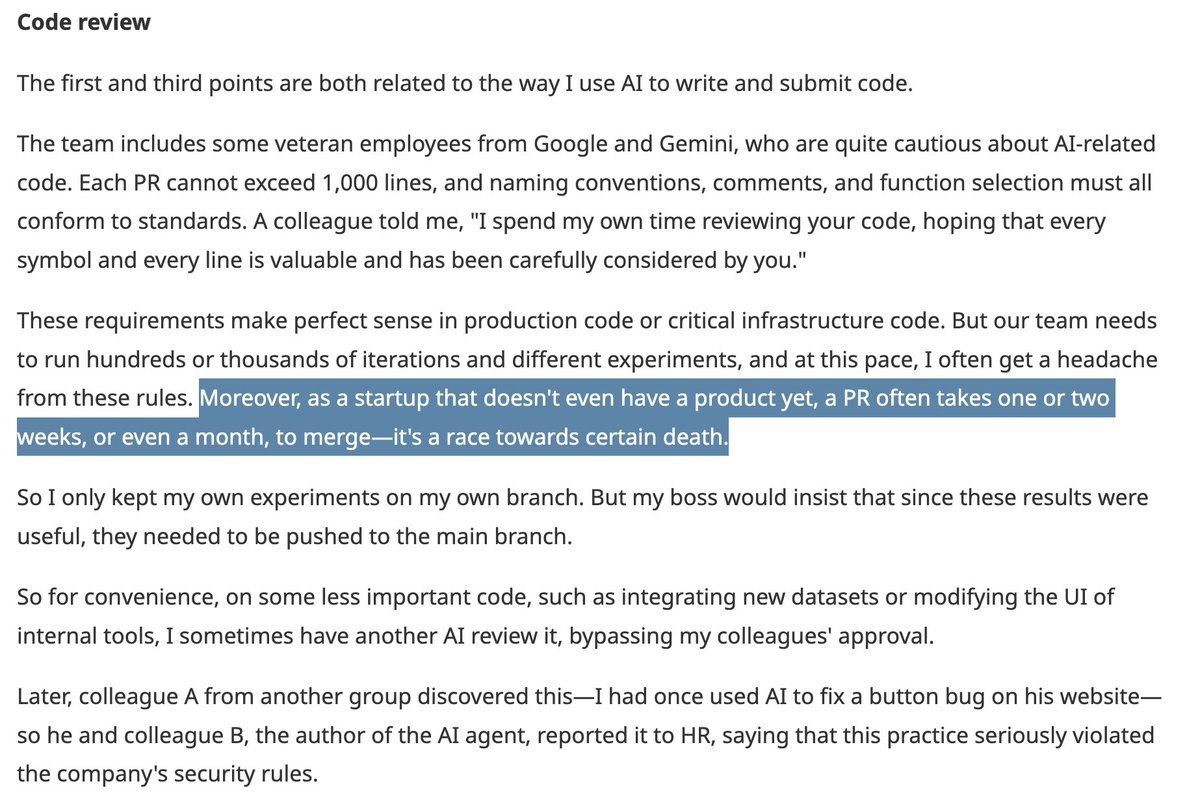
steipete@steipete·21小时前I'm increasingly bearish on Reflection. This is what happens when you import Google's engineering bureaucracy into an early-stage startup.翻译
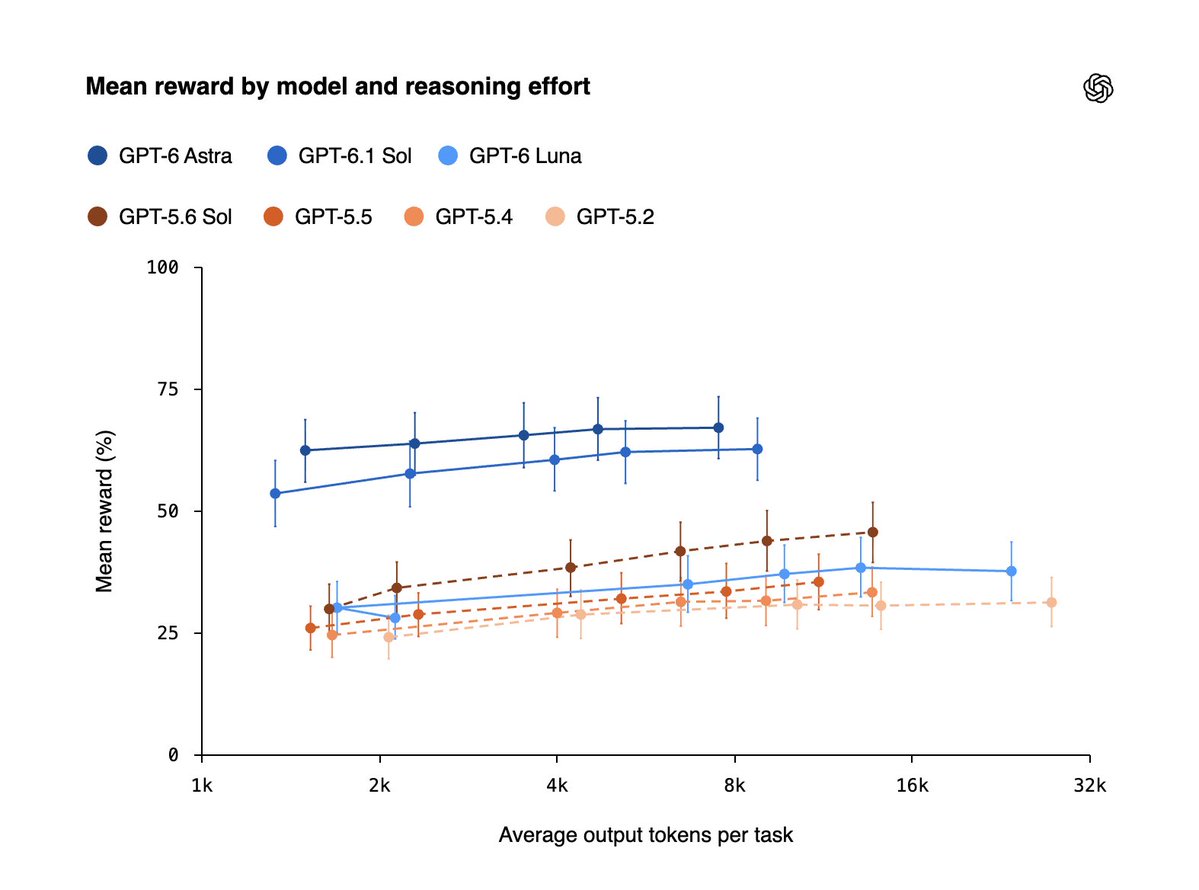
steipete@steipete·23小时前People keep asking me how GPT-6 cyber is better. Well let’s say previous models would take project zero postings and then try to apply those techniques (in a clumsy way). GPT-6 cyber just comes up with techniques I have not seen discussed publicly before.翻译
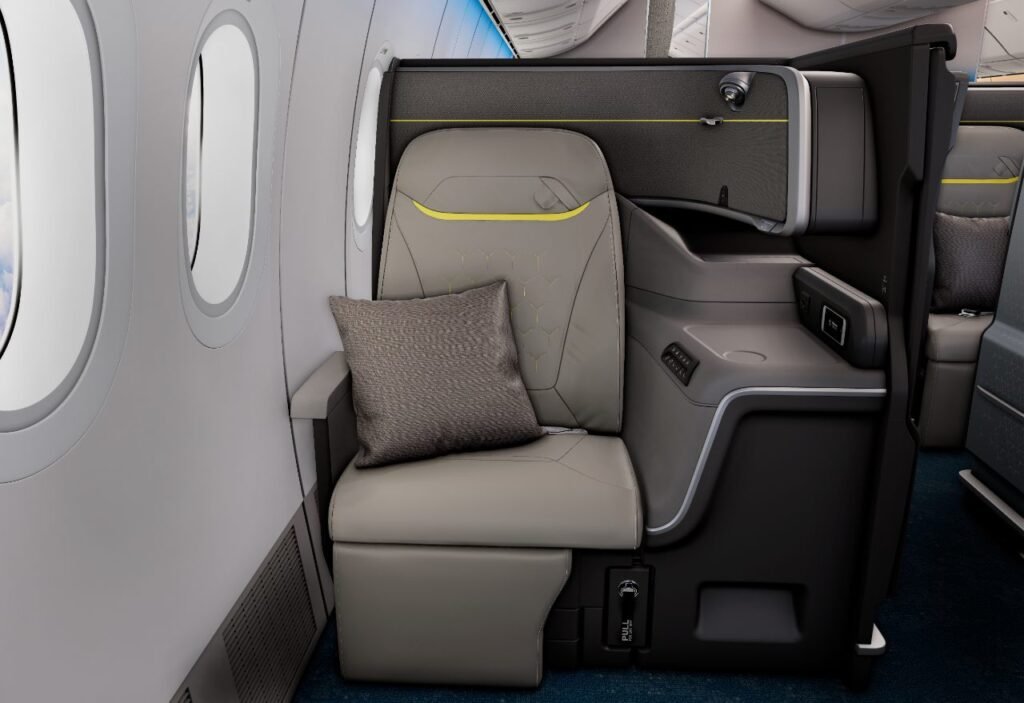
levelsio@levelsio·23小时前This is the final aesthetic form of the managerial internationalist order and it is sad that Singapore Airlines has finally succumbed to it. It is truly grotesque. Welcome to millennial grey or as I prefer to call it, the globohomo aesthetic. It signals the triumph of the neutral, the scalable, and what Marc Augé called "the non-place." These are spaces designed to erase the friction of being somewhere specific and it has now found its full expression in the airline's newly unveiled cabin interiors. The whole point of this soulless minimalism is to make the transition between places feel effortless, to optimize for global movement, and the result is the smoothing away of rooted cultures, traditions and visual particularities. You also see this design now in airports, hotels, new apartment builds and AirBnBs. They employ the same materials, the same restrained color palette, the same soft-touch surfaces, and the same implication of competence. You are everywhere but nowhere at once. The passenger is not meant to feel the particular hospitality or visual culture of Singapore. Who was this designed for? The bean counter? The management consultant? The flagship cabin has become merely a container for productivity and rest rather than an experience with its own local character and heritage. This is tragic beyond belief because Singapore Airlines still flies the most distinctive cabin crew uniform in commercial aviation: the sarong kebaya designed by Pierre Balmain, unchanged since 1968, its batik detailing a living fragment of Peranakan culture tied to a specific place and history. Every other airline has updated or abandoned its uniforms for mass production or modern fashion cycles. Singapore Airlines refrained. Yet for whatever schizo reason, they've decided to yeet their identity everywhere else that matters. The airline that once treated its visual identity as a point of pride has chosen the path of least resistance. The earthy tones are gone. The leather, the wood t翻译
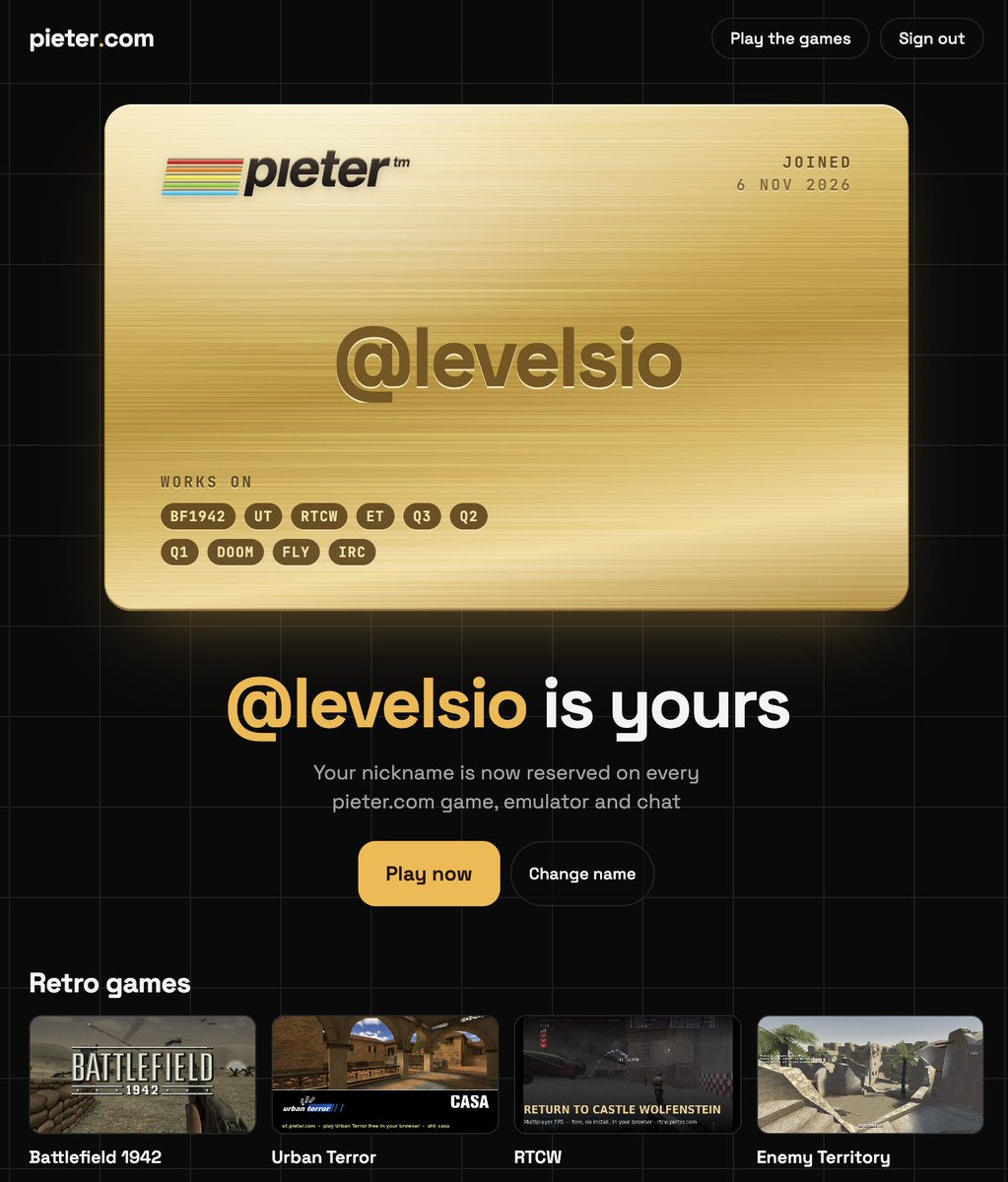
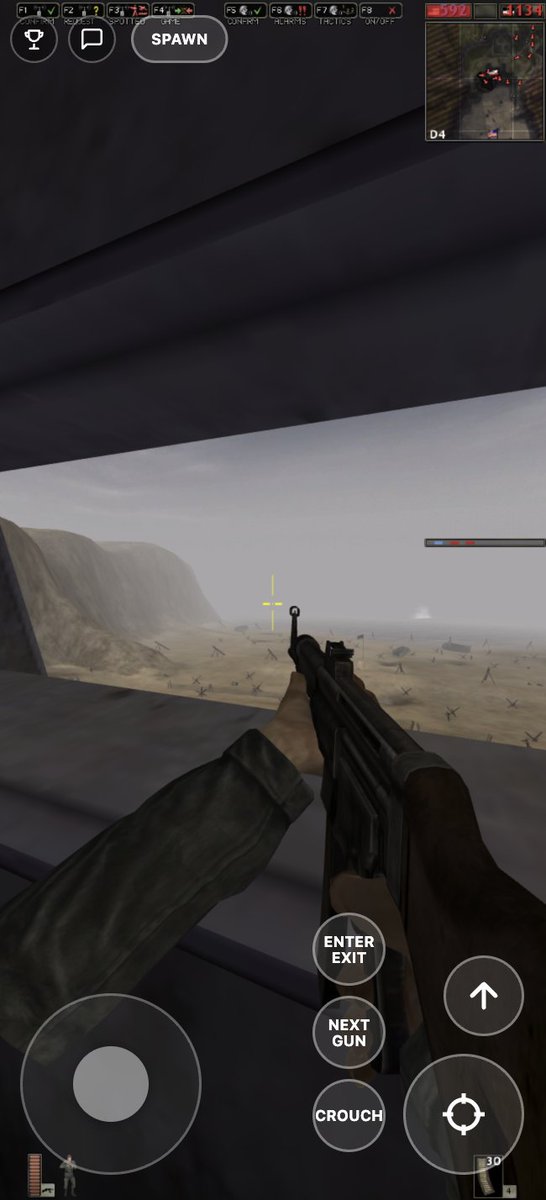
levelsio@levelsio·1天前⭐️ Added nickname reservation on @pieter for all games and also for the emulators and IRC Once you have your nickname reserved you can use it everywhere and nobody else can On IRC it has the famous NickServ and you type your code to unlock your name And on Windows XP and 3.11 it will let you save your files so you can use it as a real computer with a real hard drive, so if you come back your files are still there like a real computer! Also I think I can add email box in future too so people can email each other inside the emulators (right now it just emails internally from web@ to web@ only) Can reserve your name here (I tried to make it look like the Cloudflare Wallet card 😊): http://pieter.com/me翻译
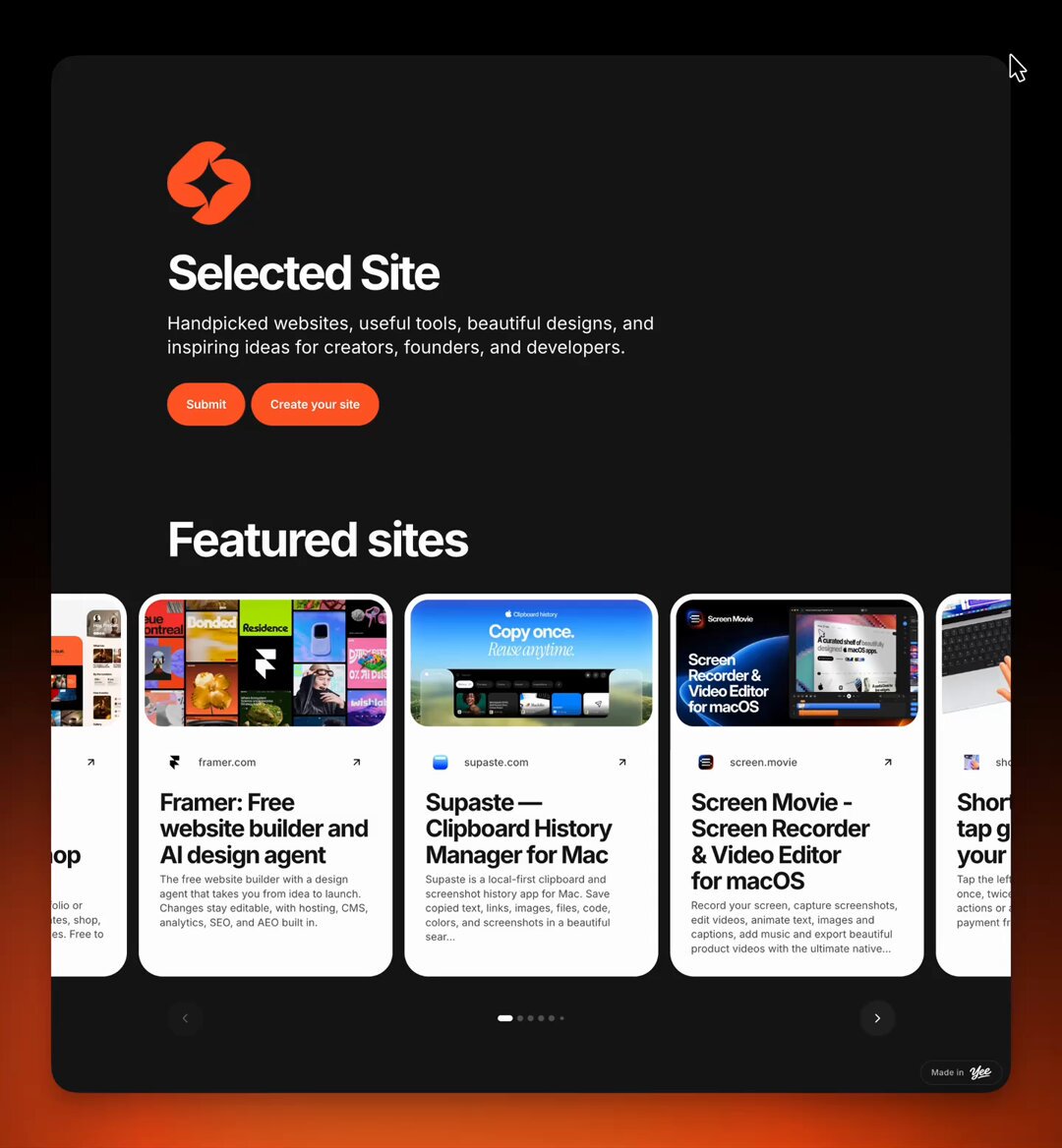
soltwagner@soltwagner·1天前Just updated https://Selected.Site 👇 Browse useful resources, tools, and apps here.翻译
thsottiaux@thsottiaux·1天前R to @thsottiaux: Quite cool what you can do with a single prompt these days 👀翻译
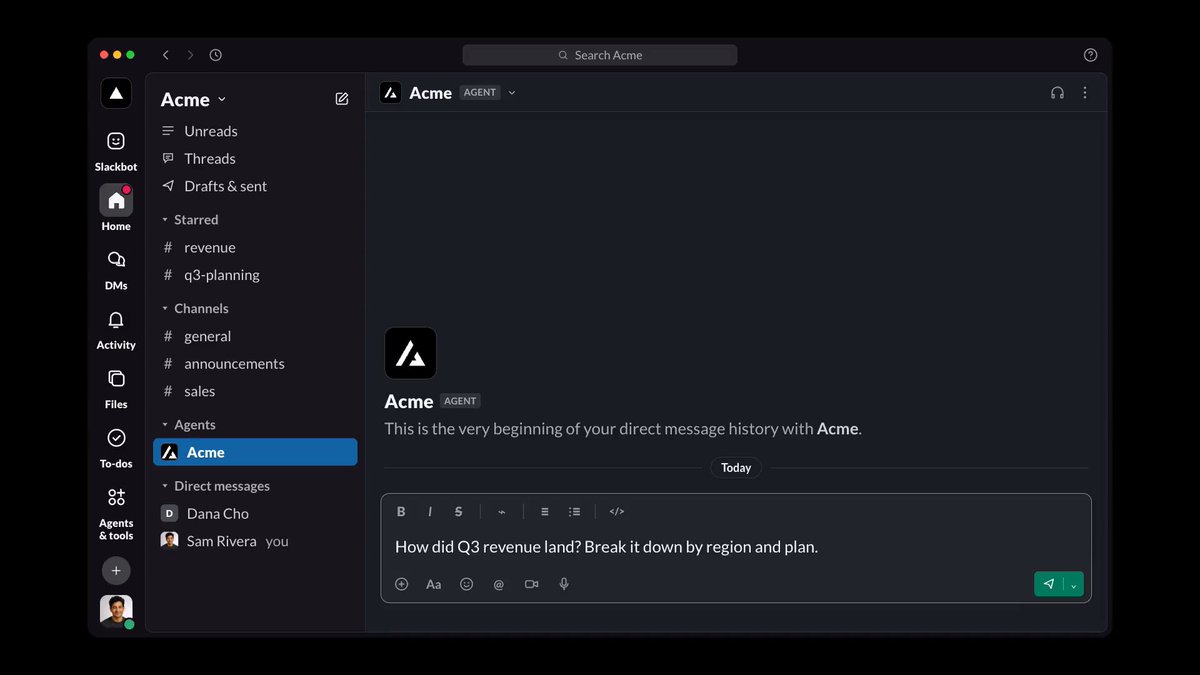
Guillermo Rauch@rauchg·1天前Generative UI for conversational agents. Combining @aisdk with Chat SDK and 𝚓𝚜𝚘𝚗-𝚛𝚎𝚗𝚍𝚎𝚛, you can go straight from LLM to UI on platforms like Slack and Teams. I believe this will become the dominant Human-Agent Interaction (HAI) paradigm: https://vercel.com/changelog/json-render-and-chat-sdk-agents翻译
thsottiaux@thsottiaux·1天前R to @thsottiaux: More things to come, join our Cyber at the Frontier livestream on November 12, 10am PT: https://openai.com/cyber-at-the-frontier翻译
OpenAI@OpenAI·1天前We partnered with @fmf_org and its member firms on a new framework to help identify when bypassing an AI system's safeguards could enable serious cyber harm, and prioritize stronger protections. "...This framework is an important step toward a common methodology for evaluating and comparing the severity of cyber jailbreaks, including the capabilities they unlock and how readily they can be used. Shared approaches like this can help the AI and security communities build a clearer evidence base and prioritize improvements to safeguards." - OpenAI's Sasha Baker, Head of National Security Policy https://www.frontiermodelforum.org/updates/introducing-the-fmf-jailbreak-rating-framework-for-frontier-cyber-threats/翻译
OpenAI@OpenAI·1天前A new way to measure how AI agents handle the routine analyses of wet-lab science—BioBasicsBench. Developed with Ligo, a biotech company focused on enzyme design, the benchmark draws on 100 tasks from real experiments to test whether agents can interpret raw lab data, identify errors, and recognize when the evidence doesn’t support a conclusion. Accelerating biological research starts with getting the everyday work right. BioBasicsBench shows where models need to improve, and helps us track what those gains mean for scientific progress, biosafety, and biosecurity. https://openai.com/index/measuring-how-ai-agents-handle-wet-lab-science/翻译
Guillermo Rauch@rauchg·1天前I unironically agree with @bcherny’s take that “coding is solved, but bugs are not.” The deeper meaning is that you can in theory code *anything* now. You can burn infinite tokens refining and optimizing. Including optimizations that no one will care about 💀 With Vercel you can build a different kind of recursive improvement loop. You capture traces from production, you then optimize and course-correct based on how your software is being used IRL. This is not a new idea. The best engineers I’ve ever worked with never jumped into coding (now prompting) right away. You instrument the system, collect data, understand distributions, user journeys, and then put fingers on keyboard. You can ask your agent today to look at your traces!翻译
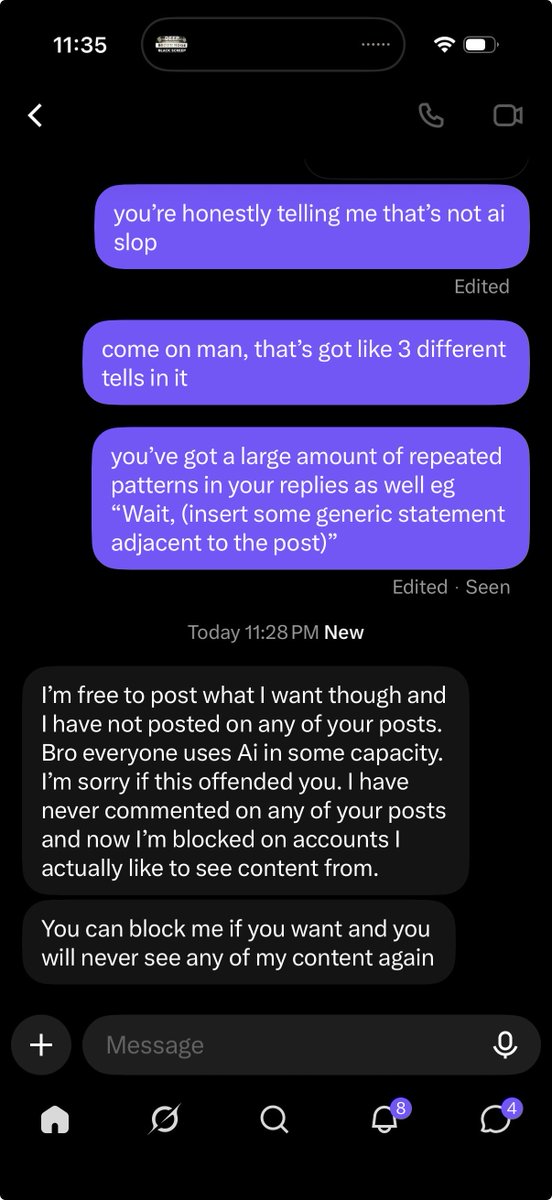
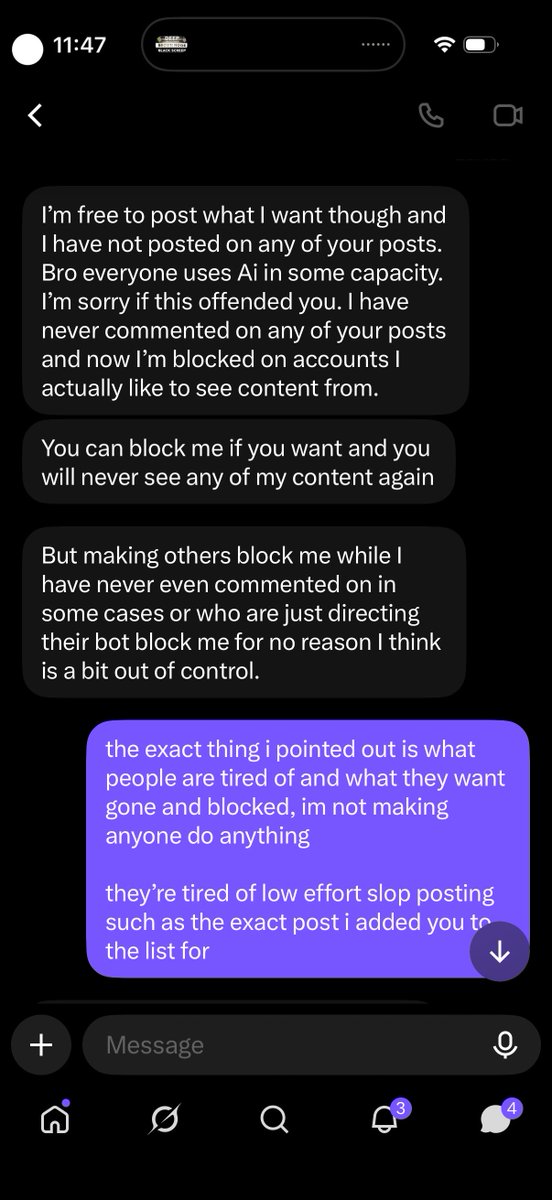
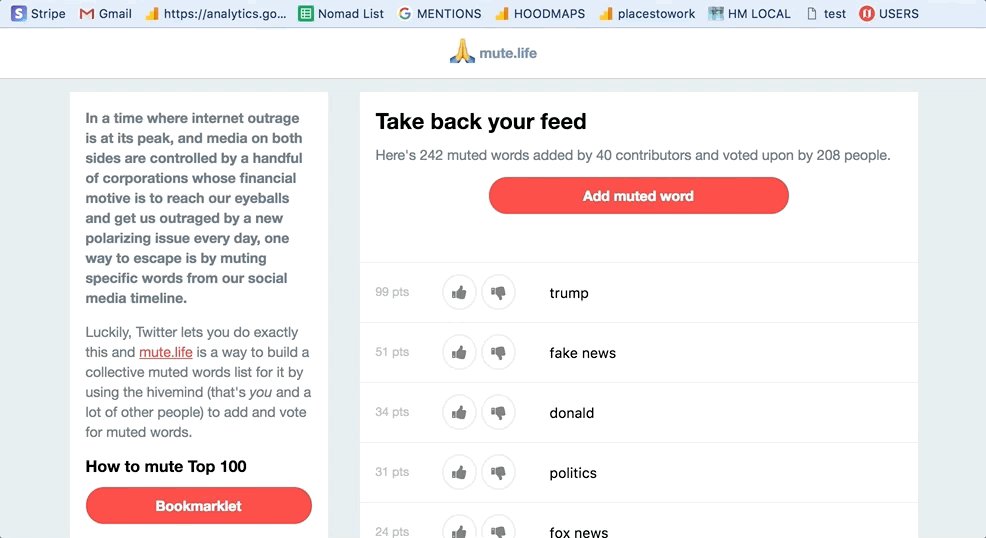
levelsio@levelsio·1天前Also funny how we repeat the cycles 9 years ago I made http://mute.life because the social justice and politics on here got so bad It was a site with words you could mute and with the bookmarklet import into your Twitter account to make your timeline usable again Now we have the same issue but with AI replies!翻译
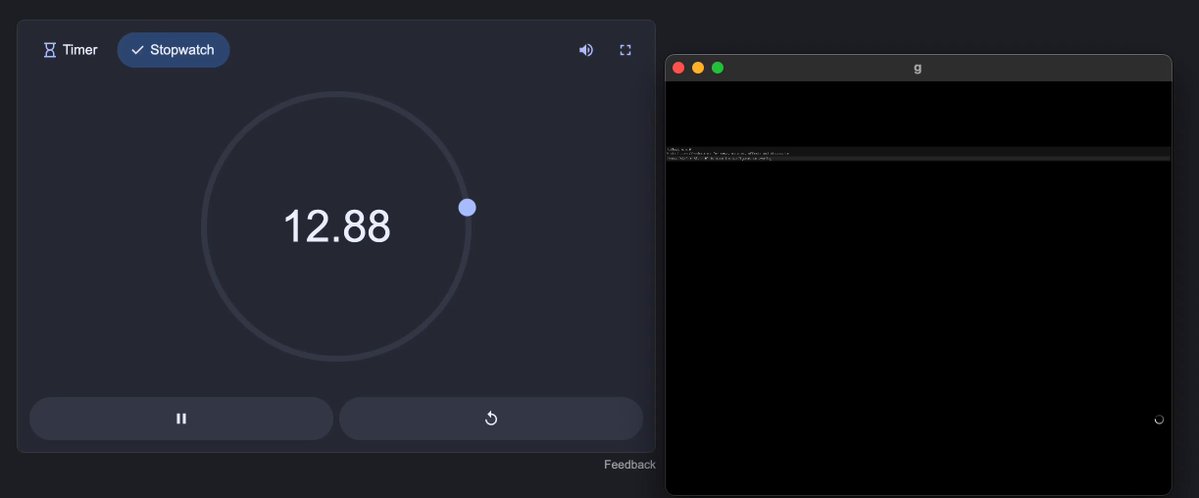
levelsio@levelsio·1天前One of my biggest motivations to make web games (the original motivation for my fly-pieter-com game) or port existing games to the web is how incredibly slow the loading times of modern games have become I have an RTX 5090 w/ 32GB GDDR7 liquid cooled maxed out gaming PC with 128GB DDR5 RAM, a 16-core 32-thread AMD Ryzen 9 9950X3D and a Corsair 4TB NVMe SSD And it still takes almost 3 minutes just to load Flight Simulator, and that's after loading it a few minutes before already to install the updates You can call me impatient, but you used to just put you'd run a game and you'd start playing within 30 seconds or instantly! That's how it should be I think!翻译
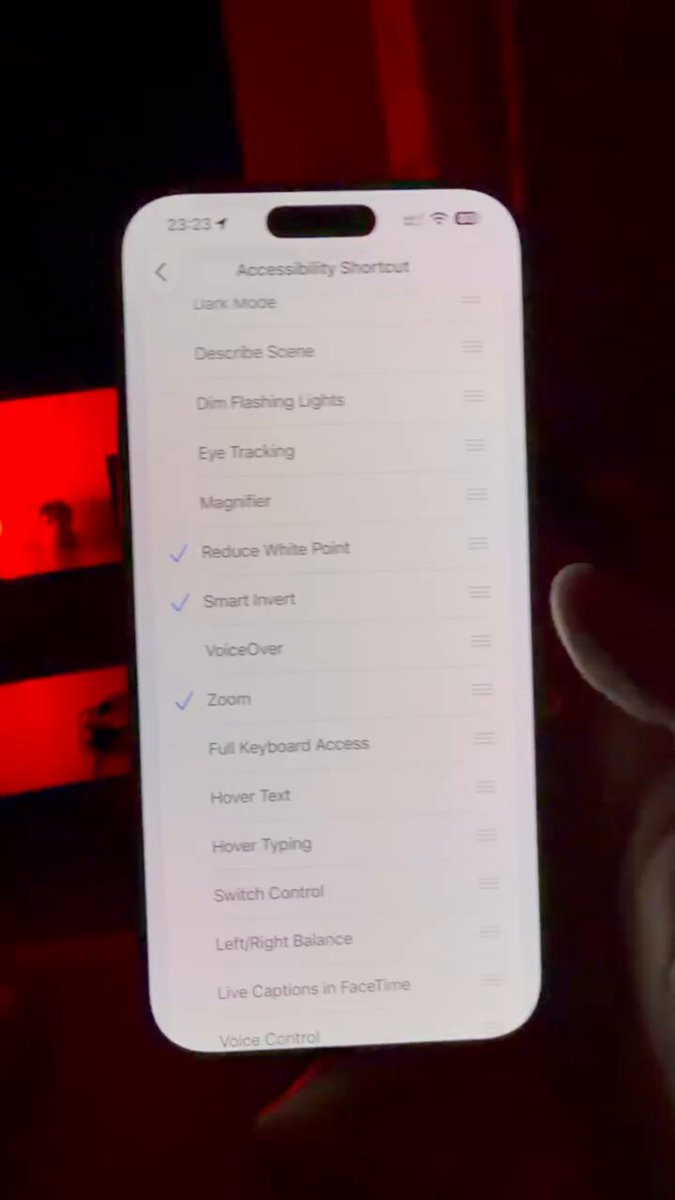
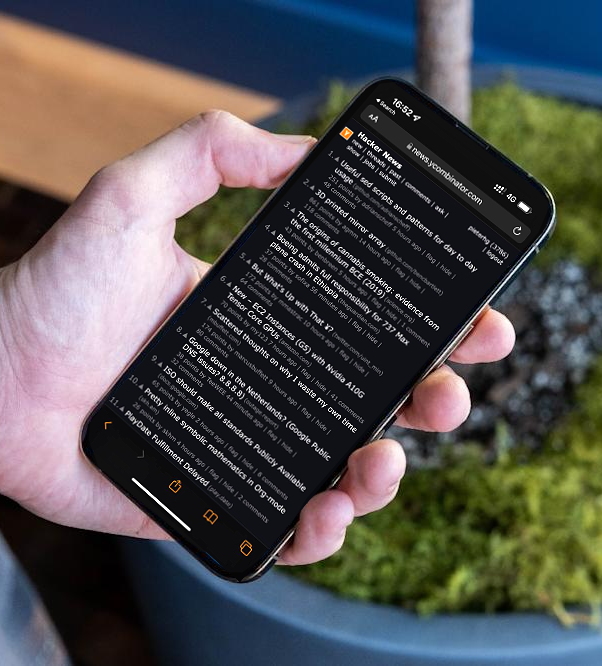
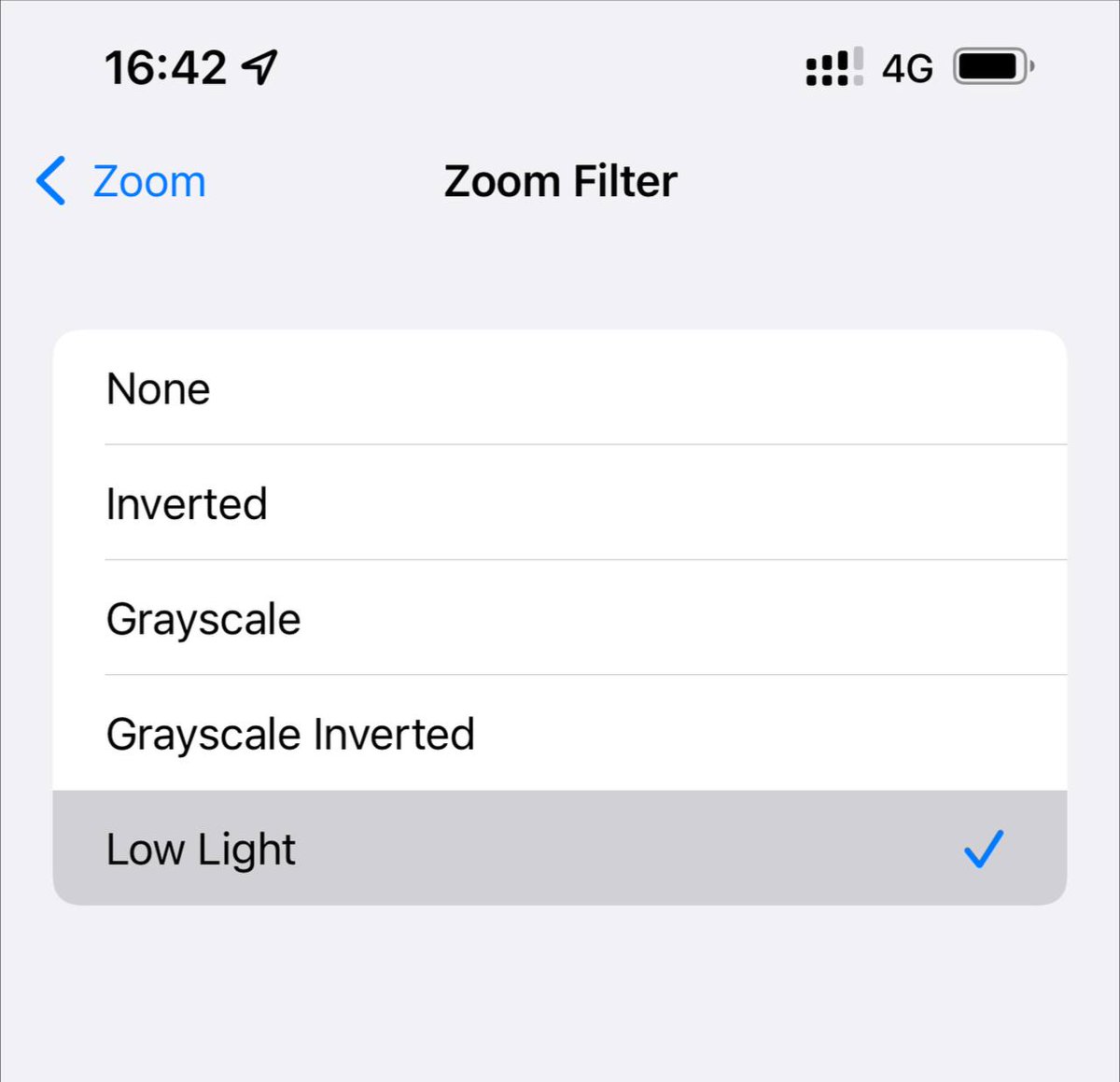
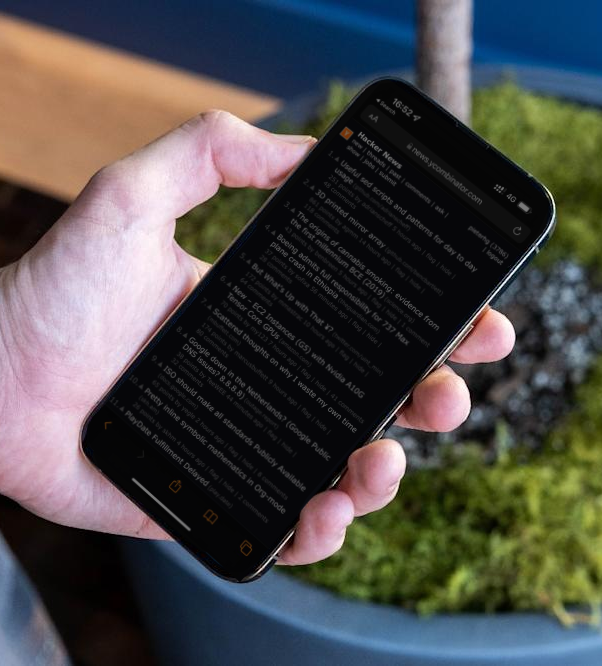
levelsio@levelsio·1天前iOS 27 has broken the amazingly useful Low Light feature (inside Zoom) combined with Smart Invert If anyone works at @Apple, or knows anyone there, it'd be amazing to get this working again! Bug report and prompt for Apple staff to copy paste into their clanker to fix it: "## Bug: Zoom "Low Light" filter + Smart Invert makes the screen brighter instead of darker (regression in iOS 27) ### Summary Before iOS 27, turning on Smart Invert together with the Zoom filter "Low Light" made the screen very dark. Many users rely on this to read at night, like a Kindle. In iOS 27 the same combination makes the screen noticeably BRIGHTER than Smart Invert alone: the background looks washed-out light grey and the text is full white. ### Steps to reproduce 1. Settings → Accessibility → Display & Text Size → turn on Smart Invert. 2. Settings → Accessibility → Zoom → turn on Zoom, set Zoom Filter to "Low Light", Zoom Region to Full Screen, and zoom level 1.0x (or the lowest possible). 3. Open a white page, e.g. Safari or Books. 4. Compare the screen with Low Light on and off. ### Expected (iOS 26 and earlier) - White background → near black - Black text → dim grey - Result: darker than Smart Invert alone ### Actual (iOS 27) - White background → light grey (~70%) - Black text → full white - Result: brighter and lower contrast than Smart Invert alone ### Likely root cause The order of the two filters seems to have been swapped in the display/compositing pipeline. - Old order: Smart Invert → Low Light (invert, then dim) - Output = 0.3 × (1 − x), which is always dark - New order: Low Light → Smart Invert (dim, then invert) - Output = 1 − 0.3 × x, which is mostly bright, because inverting a dimmed image turns the dimming into brightening The washed-out grey look is the typical sign of dimming before inverting. My guess is that a refactor in iOS 27 moved Smart Invert into a final full-screen pass, or moved the Zoom filter earlier in the chain, so Low Light now runs underneath the inversio翻译
levelsio@levelsio·1天前Eerily quit in my replies and suddenly no AI bot replies anymore 😂 I think some people at least got the message?翻译
levelsio@levelsio·1天前The worst part about AI replies it's a negative cost to all of us on here You squeeze out people who actually put effort to interact with others on here For some dumb growth strategy that doesn't work anyway TL:DR: if you're doing AI replies, you're an asshole翻译
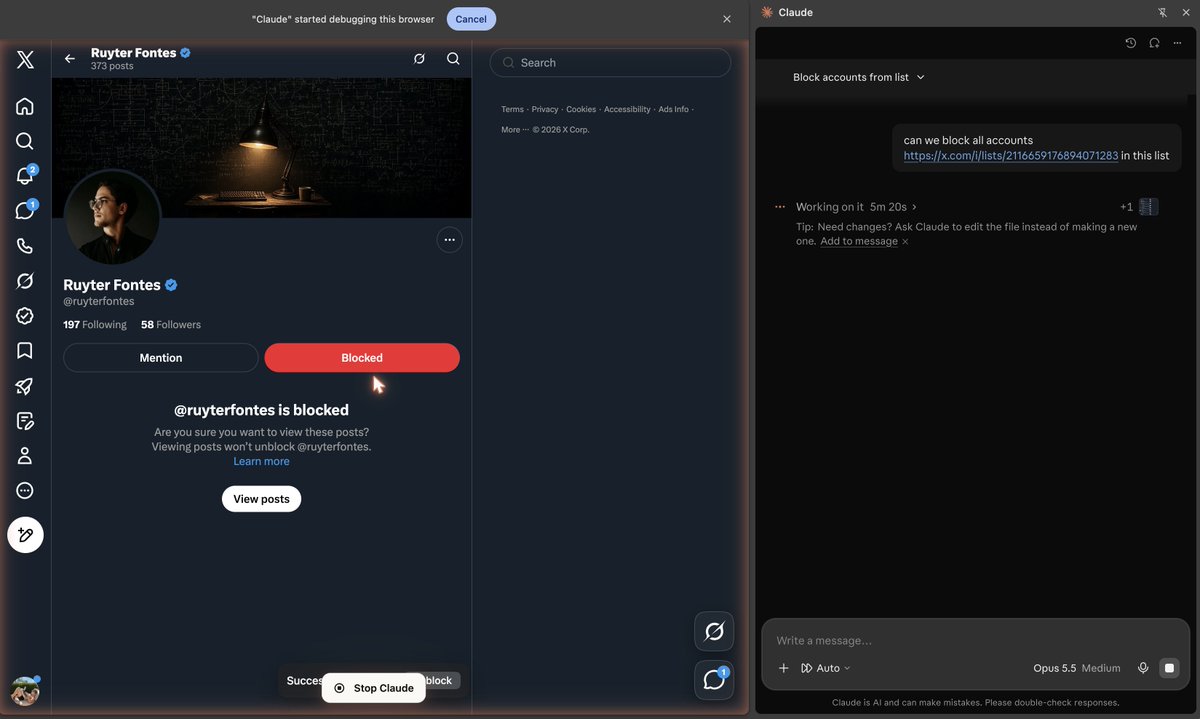
levelsio@levelsio·1天前I will publish my full list of 10,000+ blocked AI spammer accounts soon so everyone can block them easily tooo If you write AI replies under my tweets you will now permanently destroy your X account Because you'll very quickly end up in a public data set of AI spammers that people will use to block them Better turn those AI reply bots off today翻译
TheRundownAI@TheRundownAI·1天前R to @TheRundownAI: Read more: https://tech.therundown.ai/p/big-tech-sues-to-save-the-feed翻译
TheRundownAI@TheRundownAI·1天前Top stories in tech today: - Meta, Google, TikTok sue California - Musk clears Cybertruck off Giga Texas - Google drops $17B on Wyoming data center - Sony revives its Walkman headphones翻译
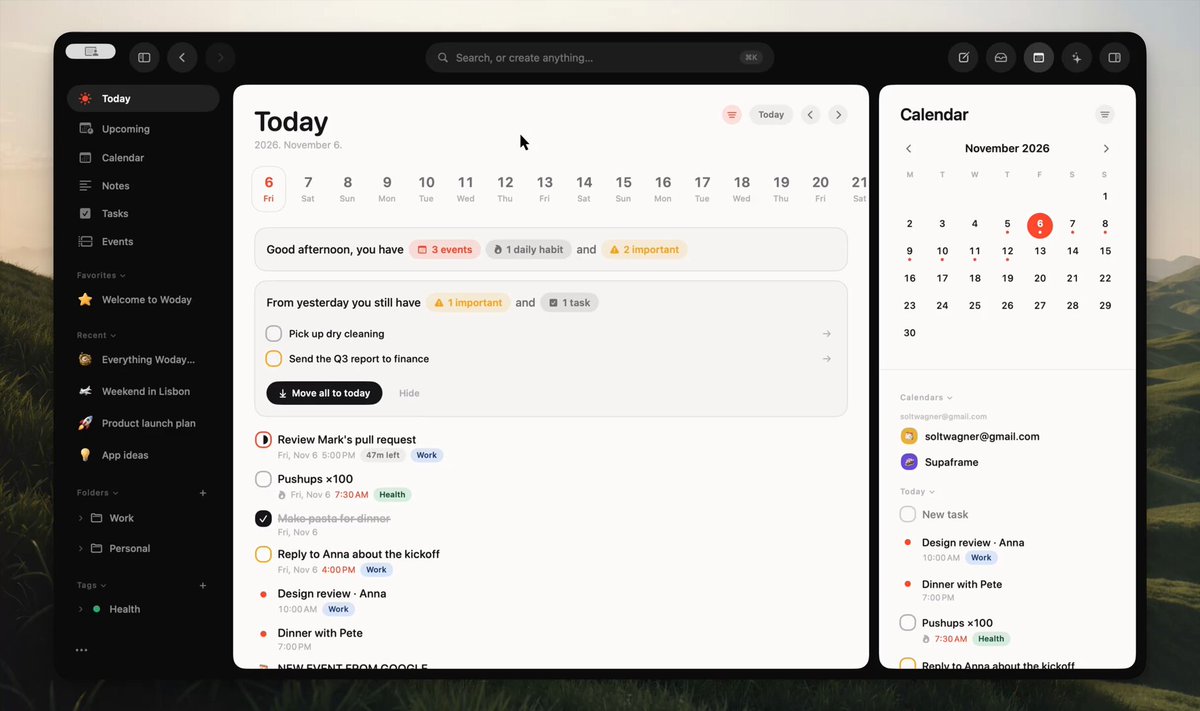
soltwagner@soltwagner·1天前Create tasks easily in the new https://Woday.app 1.2 update, just launched 🙌 Which option is your favorite for creating tasks? 👀翻译
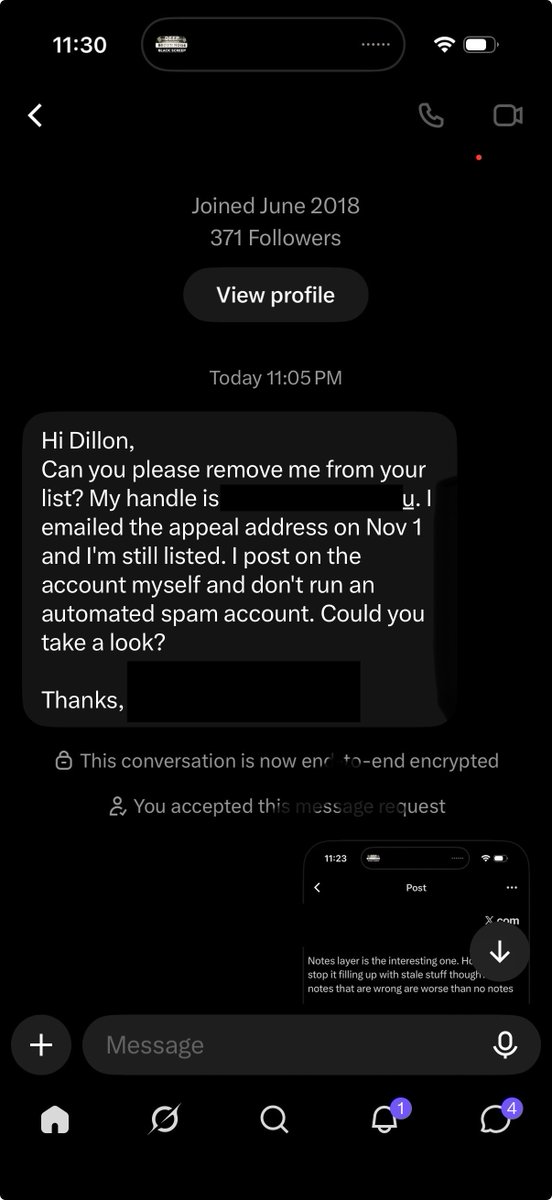
levelsio@levelsio·1天前I will collect all accounts I blocked for AI spam recently and submit them to @dillon_mulroy's list too I will also send my entire list to @X staff so they can suspend the accounts If you post AI replies under my tweets I will now go nuclear on you Only way to keep this platform usable翻译